
*This post may contain affiliate links for which I earn commissions.*
When you’re deep in the backcountry, power isn’t just a convenience—it’s a lifeline. Whether it’s keeping your GPS alive, topping off a headlamp, or sending out a check-in message to let folks know you’re safe, reliable charging gear can make the difference between an easy trip and a miserable one.
I’ve had my fair share of hunts where my battery meter dropped faster than I expected. One trip in particular, I thought I had it all figured out. I’d packed my phone, GPS, and a small power bank, thinking that would be plenty. But by day three, my devices were gasping for juice and I still had miles to cover before I’d see the truck again. Let’s just say I learned the hard way that “good enough” isn’t good enough when you’re miles from anywhere.
That’s where the Dark Energy Poseidon Pro and Spectre 18W solar panel come in. They’re designed for people like us—hunters, hikers, and backcountry wanderers who can’t just plug into a wall when the battery icon turns red. The Poseidon Pro promises rugged durability and enough capacity to keep your essential gear running, while the Spectre solar panel offers a way to recharge without ever leaving the wild.
In this review, I’ll share my real-world experience using these two products together during a multi-day hunt. I’ll walk you through how they performed, where they shined, and a few things I’d keep in mind if you’re considering adding them to your kit. My goal isn’t just to tell you whether they work—it’s to help you decide if they’re the right fit for your hunts and adventures.
So, grab your coffee, settle in, and let’s talk about whether this power duo can really keep you charged when the only outlet is the sun.
Product Overview
A. Dark Energy Poseidon Pro Power Bank
The Poseidon Pro isn’t your average pocket charger—it’s built like it expects to be dropped, rained on, and frozen solid. On paper, it packs a solid punch with 10,200 mAh of capacity, enough to recharge a smartphone multiple times or top off smaller devices like a GPS, satellite communicator, or headlamp. At 9.6 ounces, it’s not ultralight, but it strikes a good balance between weight and usable power for multi-day hunts.
Ruggedness is its calling card. It’s rated IP68, which means it’s fully waterproof and dustproof. Drop it from head height onto rock, and it’ll keep ticking. It’s also built to handle extreme temperatures, which is a lifesaver when you’re hunting in sweltering summer heat or glassing from a frozen ridge in late season.
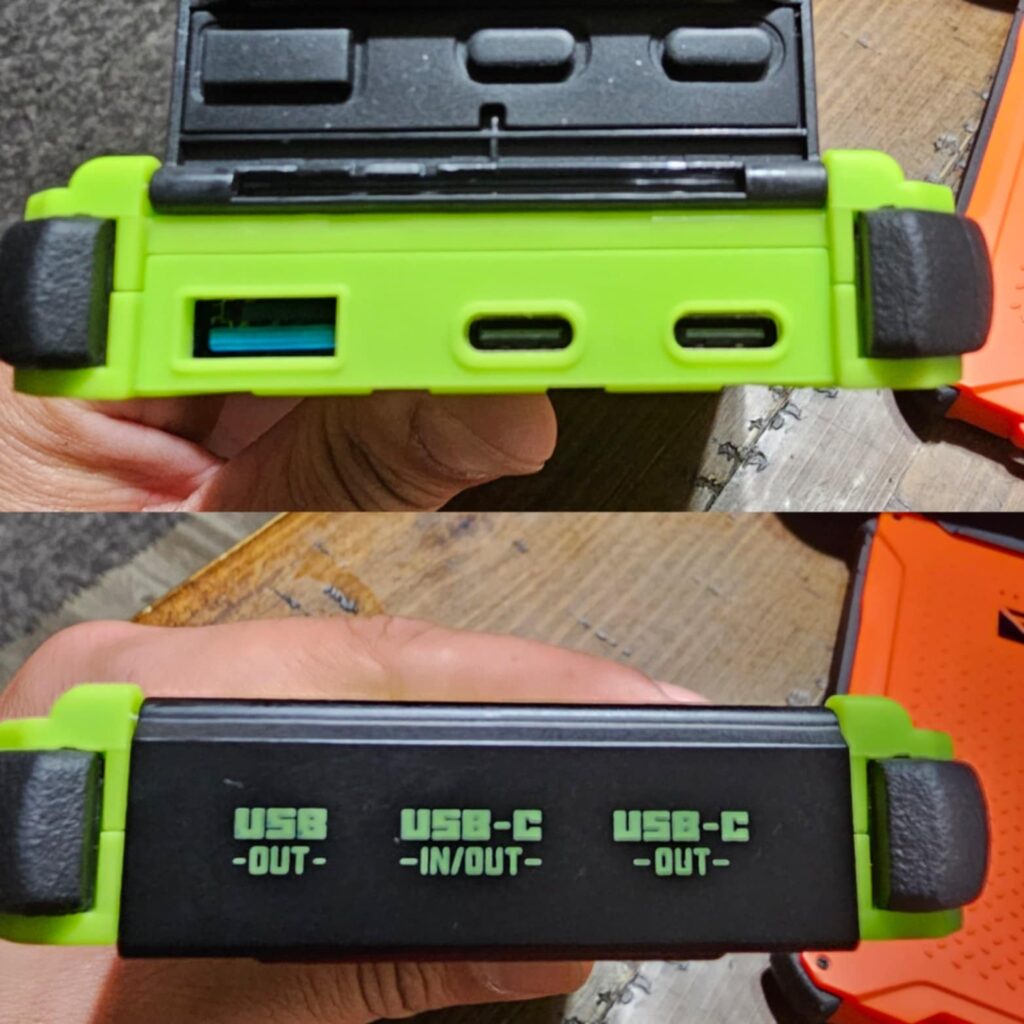
The port setup is straightforward but versatile: one USB-C in/out and one USB-C out port for fast charging, and one USB-A out ports so you can juice up multiple devices at once. The included short cable is tough and weather-resistant, but you can use your own if you prefer.
In short, the Poseidon Pro is less of a “baby your electronics” type of power bank and more of a “throw it in your pack and don’t worry about it” piece of gear.
B. Dark Energy Spectre 18W Solar Panel
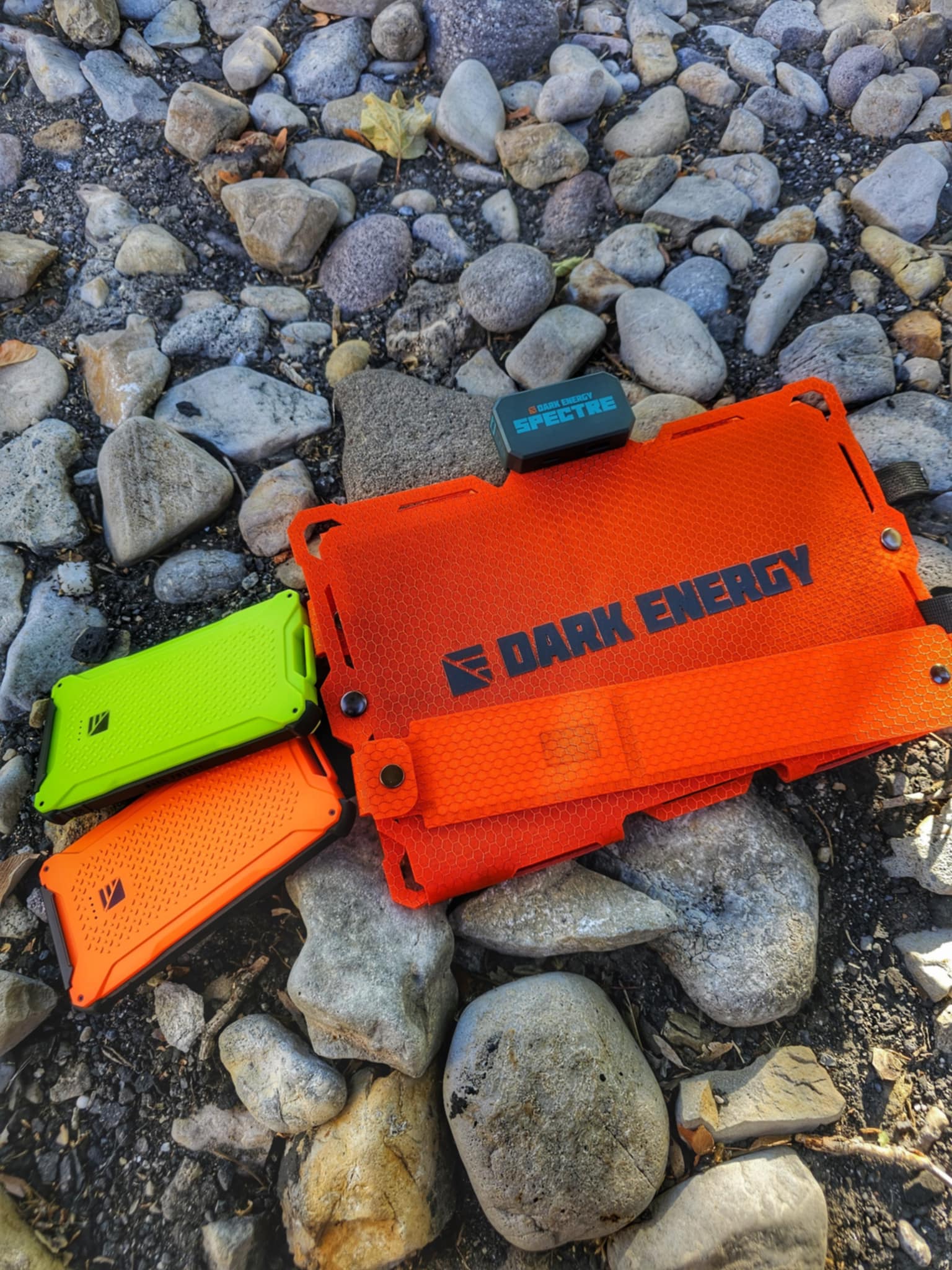
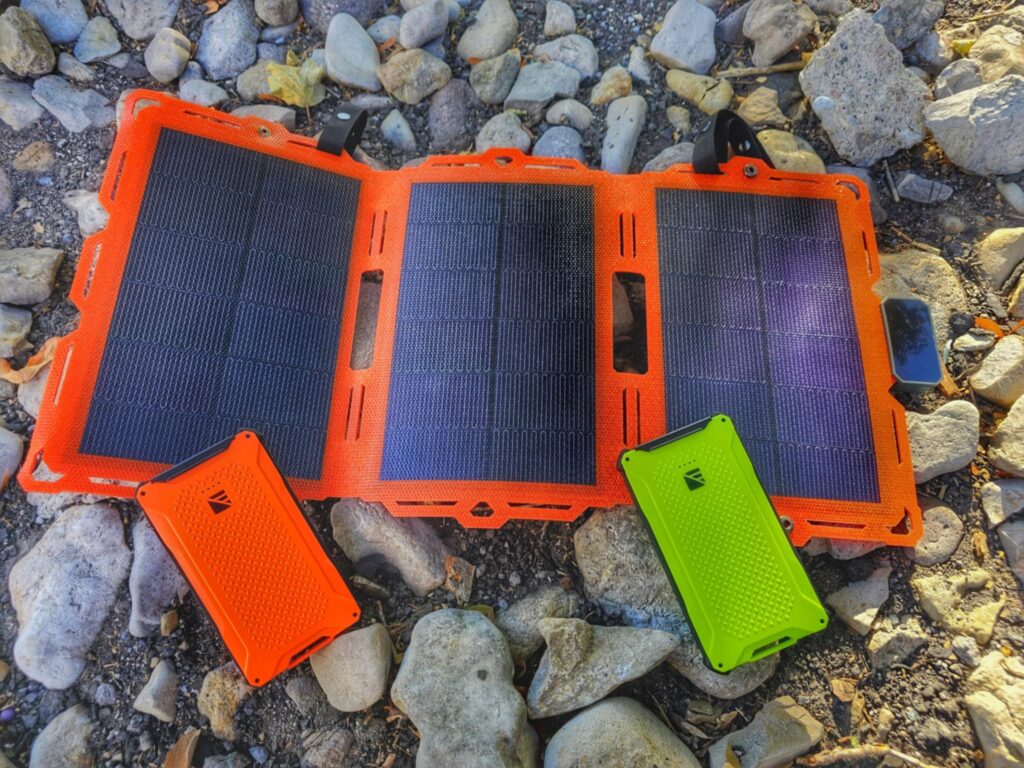
If the Poseidon Pro is the battery, the Spectre 18W solar panel is its off-grid power source. This foldable, tri-panel design puts out 18 watts in optimal sun, which is enough to directly charge a phone or keep the Poseidon Pro topped up during the day. At just over a pound, it’s light enough to toss in your pack without feeling like you’re hauling an extra tent pole.
The Spectre folds down small, making it easy to slide into a pack’s side pocket or lash to the outside. When it’s time to charge, you just unfold it, angle it toward the sun, and plug in. The built-in USB-A and USB-C outputs make it compatible with the Poseidon Pro as well as most other electronics—smartphones, GPS units, radios, and even small camera batteries.
It’s designed with backcountry use in mind, so the outer fabric can handle a bit of abuse from dirt, wind, and the occasional brush with tree limbs. It works best in direct sunlight, but it’ll still trickle power on cloudy days—just enough to keep your devices from dying while you’re glassing or making camp.
The Poseidon Pro and Spectre 18W were clearly made for each other, but they’re versatile enough that you could pair them with almost any small electronics you bring into the field. Together, they make a solid one-two punch for staying powered far from the grid.
First Impressions
When the Poseidon Pro and Spectre 18W showed up, the first thing I noticed was the packaging—it’s not flashy, but it feels intentional. The boxes are compact, easy to open, and don’t make you wrestle with a mess of twist ties or clamshell plastic. Right away, it gave me the sense that these weren’t meant to be “showroom pretty” gadgets. They’re tools.
The Poseidon Pro has a satisfying heft in the hand—solid without feeling like you’re carrying a brick. The rubberized exterior feels grippy, even when your hands are wet or cold, and you can tell it’s built to take abuse. The port covers snap into place tightly, so there’s no question about water or dust getting in. I didn’t feel like I needed to baby it, which is a big plus for something that’s going to ride around in my pack with knives, stoves, and who knows what else.
The Spectre 18W instantly stood out for how thin it folds down. I’ve used solar panels before that felt like hauling a road sign, but this one packs flat and slides easily into a side pocket. The fabric feels durable, almost like a high-end tent material, and the stitching around the panels is tight and clean. The built-in loops make it easy to lash to a pack for charging on the move, which is exactly how I like to run solar when I’m hiking between glassing spots.
Portability-wise, both fit into my backcountry setup without forcing me to rethink my pack layout. The Poseidon lives in the top lid for quick access, and the Spectre tucks into a side pocket or straps to the outside when the sun’s out. Together, they don’t feel like “extra” gear—they just feel like part of the essentials.
First takeaway? These two products look and feel like they were made for the kind of trips where gear gets banged up, rained on, and still needs to work at the end of the day.
Real-World Testing
A. Field Conditions
I put the Poseidon Pro and Spectre 18W to work on a five-day backcountry elk hunt in the high country. Our camp sat just under 9,000 feet, surrounded by a mix of open ridges and thick timber. This wasn’t a “set it on the porch and see how it does” type of test—it was the kind where gear lives in your pack all day, gets bounced around, and gets used in camp every night.
Weather didn’t cut me any slack. Day one was sunny and warm. Day two brought heavy rain in the afternoon. By day three, we had frost on the tent and our water bottles were freezing around the edges. Highs hovered in the mid-40s, lows dropped into the 20s, and the wind never really quit. Perfect conditions to see if this setup could keep up when Mother Nature isn’t playing nice.
B. Poseidon Pro Performance
The Poseidon Pro quickly became the “charging station” for the trip. I used it to top off my phone (running mapping apps in airplane mode), my GPS unit, and my rechargeable headlamp. It handled all three without breaking a sweat. Charging speed for my phone was solid—around the same as plugging into a wall at home—and my GPS and headlamp charged even faster.
Cold weather is usually the enemy of batteries, but the Poseidon Pro held up better than I expected. I kept it in an inside pocket overnight to avoid deep-freeze conditions, and it lost almost no charge from sitting idle. Over five days, I got about three full phone charges plus multiple smaller device top-offs before the battery was spent. That’s close to the advertised capacity, which is rare with power banks in the cold.
The dual USB-A outputs came in handy for charging my GPS and headlamp at the same time while I prepped gear in camp. It never felt sluggish or underpowered, even when running two devices.
C. Spectre 18W Solar Panel Performance
The Spectre 18W’s first test was a sunny mid-morning on an open ridge. Setup couldn’t have been easier—unfold it, angle it toward the sun, and plug in. Within seconds, my phone showed it was charging, and the power flow stayed steady. In direct sunlight, it charged my phone nearly as fast as the Poseidon Pro.
Overcast skies slowed things down, but it still pushed enough power to keep devices from losing charge, which is better than some panels I’ve tried. In low light—think late afternoon or early morning—it wasn’t enough to gain much battery percentage, but it kept things from dropping.
When charging the Poseidon Pro directly, the Spectre did well under good sunlight. It’s not an instant refill, but leaving the panel in the sun for several hours gave the Poseidon enough juice for another full phone charge. Smaller devices like my GPS charged more quickly, making the panel perfect for topping off gear throughout the day.
What I liked most was the flexibility: I could clip it to my pack while hiking and trickle charge the Poseidon, or set it up in camp and charge devices directly while I worked on other tasks. It never felt like a hassle to use, which is important for gear that needs to earn its place in the pack.
Durability & Ruggedness
I didn’t baby either of these products on this trip—in fact, I went out of my way not to. If gear is going to fail, I’d rather find out in the field than during a hunt that really matters.
The Poseidon Pro took a beating without complaint. It lived in my pack’s top lid most of the time, rattling around with spare ammo, my kill kit, and a camp stove. One evening, I accidentally dropped it onto a rocky slope while setting up camp—about a five-foot fall onto jagged granite. I brushed off some dirt, checked the ports, and it powered right up like nothing happened. Rain didn’t bother it either. I left it out during a passing shower just to see how it would handle water, and the port covers kept everything bone dry inside.
As for temperature swings, it handled frosty mornings and warm afternoons equally well. I’ve had cheaper power banks refuse to charge in the cold, but the Poseidon kept delivering consistent output. I’m not saying it’s magic—it still helps to keep it in a pocket at night—but it’s clearly built for more than just summer camping trips.
The Spectre 18W had its own set of challenges. Being clipped to my pack meant it got whacked by brush, scraped by rocks, and rattled around in the wind. The panel fabric never tore, and the stitching stayed tight. Even after being packed and unpacked multiple times a day, the hinges and folding sections showed no signs of wear.
I did get it wet a couple of times—once from rain, once from setting it on damp grass—and it kept right on charging once the sun came back out. The panel surfaces didn’t scratch easily, even after a few accidental brushes with sharp branches.
Overall, both pieces of gear proved they can handle backcountry abuse without turning into delicate, “only in perfect weather” tools. If you’re the kind of hunter who doesn’t want to think twice about whether your electronics can survive the trip, this duo has you covered.
Practical Use for Hunters & Backcountry Travelers
On a hunt, power isn’t just for convenience—it’s for keeping critical tools running. A dead GPS, headlamp, or phone in the backcountry can turn a good trip into a dangerous one fast. The Poseidon Pro and Spectre 18W fit neatly into that “peace of mind” category.
During my five-day trip, the Poseidon Pro handled all my charging needs for the first three days without even touching the solar panel. By day four, I started using the Spectre to keep it topped off while we were glassing or hiking to new spots. That combo meant I never once worried about my devices running out of juice.
For hunters who run mapping apps, take photos, or use satellite messengers, this setup offers a safety net. You can burn through your phone battery marking waypoints or checking in with family, knowing you’ve got backup power ready. The Poseidon’s rugged build means you can throw it in your pack without thinking twice, and the Spectre’s lightweight, foldable design means it won’t hog space you’d rather use for gear or food.
The biggest win for me was flexibility. On sunny days, I clipped the Spectre to my pack while hiking, letting it trickle charge the Poseidon as we moved. At camp, I’d set it up in an open patch of ground and plug in smaller devices directly. On cloudy days, it still slowed battery drain enough to stretch my power reserves.
Would I bring both on every hunt? For a single overnight trip—probably not. But for anything longer than three days, especially in areas with spotty weather, the solar panel earns its keep. For base camps, remote scouting trips, or multi-day hunts where you can’t just head back to the truck, this pair is worth the weight.
Bottom line: If you’re heading into the backcountry and plan to rely on electronics for navigation, safety, or communication, having the Poseidon Pro and Spectre 18W together means you can focus on the hunt, not your battery percentage.
Pros & Cons
Poseidon Pro Power Bank
Pros:
- Rugged build – waterproof, dustproof, and drop-resistant.
- Solid capacity for multi-day trips (10,200 mAh).
- Consistent performance in both hot and cold conditions.
- Multiple ports let you charge more than one device at once.
- Fast charging for phones and smaller electronics.
Cons:
- Slightly heavier than ultralight power banks.
- Recharging from empty takes time—best paired with solar or pre-charged before trips.
- No built-in flashlight or extra “multi-tool” features (purely a power bank).
Spectre 18W Solar Panel
Pros:
- Lightweight and foldable design packs easily.
- Fast charging in direct sunlight—close to wall-outlet speeds for small devices.
- Multiple outputs (USB-A and USB-C) for compatibility.
- Durable fabric and stitching hold up to backcountry abuse.
- Works while clipped to a pack for charging on the move.
Cons:
- Performance drops on cloudy days (like all solar panels).
- Needs direct sun and proper positioning for best results.
- Not ideal for ultralight, short trips where you can get by without solar.
Together, the Poseidon Pro and Spectre 18W make a dependable duo for longer hunts and remote trips. They’re not the lightest option if you’re counting every ounce, but for reliability and peace of mind in the backcountry, they hit the mark.
Alternatives to Consider
While the Poseidon Pro and Spectre 18W make a strong team, there are a few other options worth mentioning—especially if you’re looking for something lighter, bigger, or with different features.
Rugged Power Banks:
- Goal Zero Venture 75 – Similar ruggedness with a slightly larger capacity. It’s a bit heavier, but it pairs well with a solar panel if you want more stored power.
- Nitecore NB10000 – Not as tough as the Poseidon, but ultralight and compact. Good for short trips where weight is more important than bulletproof construction.
Portable Solar Panels:
- Anker 21W Solar Charger – Lightweight and efficient in full sun, but not as rugged as the Spectre. Better suited for hikers or campers who won’t be beating through heavy brush.
- Goal Zero Nomad 10 – A smaller panel that’s easier to pack, though it charges slower and may not keep up with higher-demand devices on longer trips.
When You Might Choose These Instead:
- If your trips are mostly one or two nights and you don’t need solar, a smaller, lighter power bank can save weight.
- If you often travel in cloudy or heavily wooded areas, a higher-capacity power bank might be more reliable than depending on solar.
- If you’re running multiple high-drain devices, pairing a larger solar panel with a bigger battery bank might suit your needs better.
That said, the Poseidon Pro and Spectre 18W strike a nice balance of durability, capacity, and portability. Unless you’re chasing ultralight status or running an entire camera crew in the backcountry, this combo will cover most hunting and remote travel scenarios.
Final Verdict
After five days in the high country, I came away impressed with both the Dark Energy Poseidon Pro and Spectre 18W Solar Panel. They didn’t just survive the trip—they made it easier. I never had to ration battery life, shut off devices early, or stress about running out of power. That peace of mind alone is worth a lot when you’re miles from the trailhead.
The Poseidon Pro is exactly what I want in a backcountry power bank: tough, reliable, and able to keep my essential gear running for days. The Spectre 18W adds another layer of freedom, letting me recharge without heading back to the truck or burning through wall time before I leave. Together, they form a solid “set it and forget it” system for staying powered in remote areas.
Would I use them again? Absolutely. In fact, they’re already packed in my gear tote, ready for the next trip. The only time I might leave the solar panel at home is on a quick overnight hunt, but for multi-day trips or base camp setups, it’s a no-brainer.
If you’re a hunter, hiker, or anyone who spends days off the grid, this duo is worth serious consideration. It’s not about having gadgets for the sake of gadgets—it’s about keeping your navigation, lights, and communication tools working when you need them most.
Have you tried the Dark Energy Poseidon Pro or the Spectre 18W solar panel on your hunts or outdoor trips? I’d love to hear how they held up for you—or if you’ve found other gear that works better in the backcountry.
Drop your thoughts and experiences in the comments below. Your insights can help fellow hunters and adventurers choose the right gear for their next trip.
And if you’re curious about other backcountry essentials, don’t forget to check out my other gear reviews—I’m always testing new tools to help make your time in the wild easier and more enjoyable.
Let’s keep the conversation going!